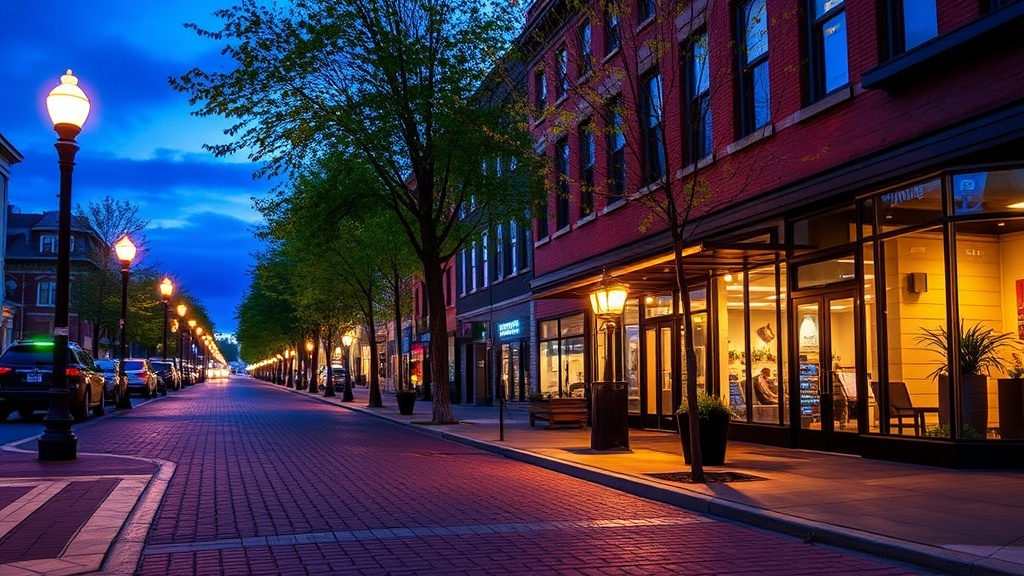
The Complete Guide to Wellington West: Ottawa's Most Walkable Neighbourhood

What Makes Wellington West Different from Other Ottawa Neighbourhoods?
Wellington West stretches along Wellington Street West from Tunney's Pasture to Island Park Drive, blending century-old homes with independent shops, craft breweries, and some of the city's best restaurants—all within walking distance. This guide covers where to eat, what to expect from the housing market, how to get around without a car, and the hidden spots locals actually frequent. Whether you're house-hunting, planning a weekend visit, or just curious about one of Ottawa's most distinct communities, you'll find practical answers here.
Where Should You Eat and Drink in Wellington West?
The neighbourhood boasts over forty independent restaurants within a ten-block stretch. Here's the thing—you could eat somewhere new every week for a year and still not exhaust the options.
The Standout Restaurants
Supply and Demand on Preston Street (technically Little Italy, but walkable from the western edge) serves handmade pasta and fresh oysters. It's not cheap—expect $35-45 per person for dinner—but the quality justifies the price. Reservations fill up fast, especially on Fridays.
Thali on Wellington West proper offers South Indian cuisine with a modern twist. The dosa selection alone warrants repeat visits. The restaurant doesn't take reservations, so arrive early or be prepared to wait on the sidewalk with a Kingfisher beer from the adjacent LCBO.
Hintonburg Public House occupies a converted corner store and nails the casual pub atmosphere. The fried chicken sandwich ($18) has developed something of a cult following. That said, the poutine—made with local St. Albert cheese curds—might be the real star.
Coffee and Bakeries
Happy Goat Coffee Company roasts beans just off Wellington and operates a bustling café near Parkdale Avenue. The Ethiopian Yirgacheffe pour-over ($4.75) delivers exactly what you'd hope for.
The Red Apron combines a butcher shop with a sandwich counter. The porchetta sandwich ($14) sells out by 1 PM most Saturdays. (Arrive before noon. Trust this advice.)
Craft Beer and Cocktails
Clocktower Brew Pub operates its original location on Clarence Street, but their Wellington West outpost draws bigger crowds—especially on the patio during summer months. The "-by-the-flight" option lets you sample four beers for $12.
The Wellington Eatery leans heavier into cocktails, with a rotating menu that changes seasonally. The bartenders know their stuff without being pretentious about it.
How Walkable is Wellington West Really?
Very. The neighbourhood scores 89/100 on Walk Score, making it the most walkable residential area in Ottawa outside the downtown core. Most daily errands require no vehicle.
| Amenity | Typical Walking Distance | Examples |
|---|---|---|
| Grocery stores | 3-8 minutes | Superstore (Parkdale), Independent (Richmond Road), multiple ethnic grocers |
| Restaurants/bars | 2-5 minutes | Along entire Wellington West strip |
| Pharmacy | 3-6 minutes | Shoppers Drug Mart, two independents |
| Bank branches | 4-7 minutes | TD, RBC, CIBC, Desjardins |
| Transit (LRT) | 8-12 minutes | Tunney's Pasture Station |
| Parks | 5-10 minutes | Parkdale Park, Hintonburg Park, the Ottawa River pathways |
The catch? Winter changes the calculus. Ottawa's sidewalks get cleared reasonably well, but January and February test even committed pedestrians. Most locals own winter boots rated to -30°C—Sorel Caribou boots remain the unofficial uniform from December through March.
The city's winter maintenance schedule prioritizes main arterials first, meaning side streets can stay snow-packed for days after major storms. Worth noting if you're considering a property on a residential side street.
What Does Housing Actually Cost in Wellington West?
As of early 2024, detached homes typically range from $750,000 to $1.4 million depending on condition and proximity to the main strip. Condos start around $400,000 for one-bedroom units in older buildings, climbing to $650,000+ for newer two-bedroom developments.
The Housing Mix
The neighbourhood offers genuine variety—something increasingly rare in Ottawa's homogenizing suburbs. You'll find:
- Victorian and Edwardian homes (1880s-1920s) with original brickwork and mature trees
- Mid-century bungalows from the 1950s and 60s, often renovated beyond recognition
- Modern infill townhomes replacing teardowns on smaller lots
- Condo conversions of former commercial buildings
- Purpose-built rental apartments—increasingly rare and correspondingly pricey
Renting? One-bedroom apartments average $1,800-2,200 monthly. Two-bedrooms run $2,400-3,000. These numbers place Wellington West among Ottawa's more expensive neighbourhoods—but still below the Glebe or Old Ottawa South.
Property values here have appreciated roughly 6-8% annually over the past decade, outperforming Ottawa's overall market. The Ottawa Real Estate Board's monthly reports provide updated figures if you're tracking trends.
The Hidden Spots
Locals know about Westboro Beach—technically in adjacent Westboro, but a 15-minute walk from western Wellington West. It's smaller and less crowded than the main Ottawa River beaches.
Tunney's Pasture Farmers' Market operates Thursday mornings from June through October. The selection isn't massive, but vendors include Acorn Creek Farm (exceptional garlic) and Castor River Farm (heritage pork).
The Great Canadian Theatre Company on Wellington West programs Canadian playwrights exclusively. Ticket prices ($25-45) undercut the National Arts Centre significantly, and the 230-seat theatre means no bad sightlines.
How Do You Get Around Without a Car?
The Confederation Line (LRT) terminates at Tunney's Pasture, putting the entire city within reach. From most of Wellington West, it's an 8-12 minute walk to the station. During rush hour, trains run every 5 minutes.
Bus routes 11, 16, and 57 serve the neighbourhood directly, connecting to downtown, the ByWard Market, and Bayshore Shopping Centre. The OC Transpo trip planner remains surprisingly accurate for timing.
Cycling infrastructure has improved dramatically. The SJAM Winter Trail (Sir John A. Macdonald Parkway) runs along the Ottawa River, offering a separated path that gets plowed in winter. From Wellington West, you can cycle to Parliament Hill in 15 minutes on dedicated paths.
Bike share? VeloGO stations dot the neighbourhood, though many locals own their own bikes given the frequency of use. The West End Well cooperative offers repair workshops if you're mechanically inclined—or need to become so.
What's the Vibe on Weekends?
Saturday mornings bring the Parkdale Market—not a farmers' market in the traditional sense, but a collection of produce vendors, flower sellers, and food trucks operating since 1924. It's compact, unpretentious, and finishes by 2 PM.
Weekend brunch crowds hit Wellington Diner and The Coaster hard. Wait times stretch past 45 minutes after 10 AM. The workaround? Early arrival (before 9:30) or weekday breakfast.
Evening energy concentrates between Fairmont and Holland Avenues. The patios fill quickly on warm nights. Winter shifts the social scene indoors—cocktail bars and restaurants with fireplaces do particularly well from November through March.
Who Actually Lives Here?
The demographic mix surprises newcomers. You'll find:
- Young professionals working at Tunney's Pasture (federal government offices) or downtown
- Longtime residents who bought decades ago and watched their property values multiply
- Empty nesters downsizing from suburban homes but refusing to leave the city
- Students from nearby Carleton University and University of Ottawa (the LRT makes commuting feasible)
- Young families drawn by the walkability and (relative) proximity to good schools
French and English coexist here more naturally than in some Ottawa neighbourhoods. Many businesses operate bilingually by default—not because they must, but because the customer base demands it.
"Wellington West doesn't try to be trendy. It just happens to offer what people actually want—good food within walking distance, housing with character, and a community that functions year-round."
The neighbourhood isn't perfect. Construction noise from LRT-related projects has tested patience. Parking frustrates visitors (residential permits restrict most side streets). And yes, gentrification concerns linger—longtime businesses have closed as rents climbed.
That said, Wellington West retains an authenticity that feels increasingly scarce. The shop owners know regulars by name. The restaurants source from nearby farms. The sidewalks actually get used—by parents with strollers, by seniors with walkers, by cyclists commuting to work.
If you're considering a move, spend a Saturday walking the full length of Wellington West from Island Park to Parkdale. Stop for coffee. Pop into the shops. Watch how people interact. The neighbourhood reveals itself slowly—and rewards those who pay attention.